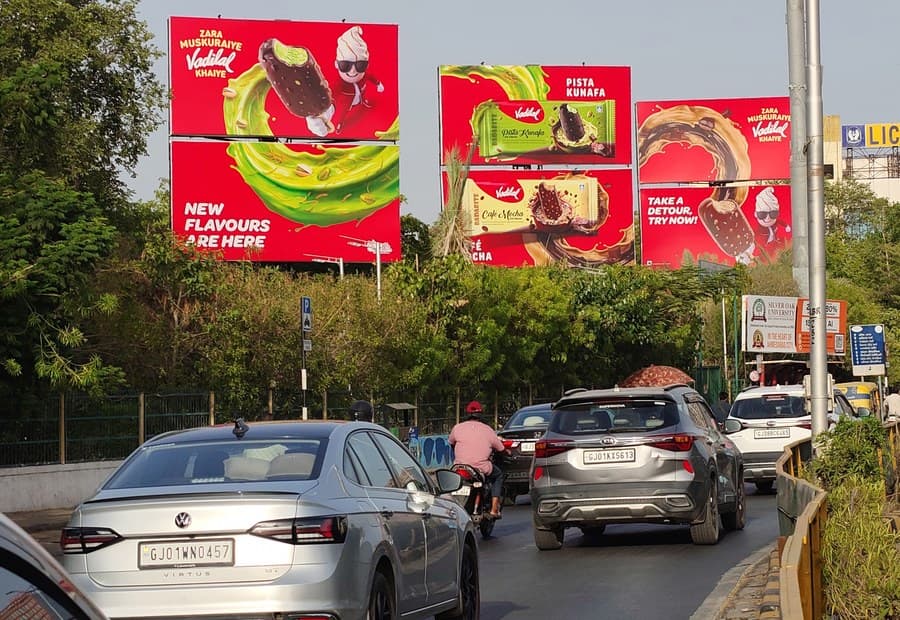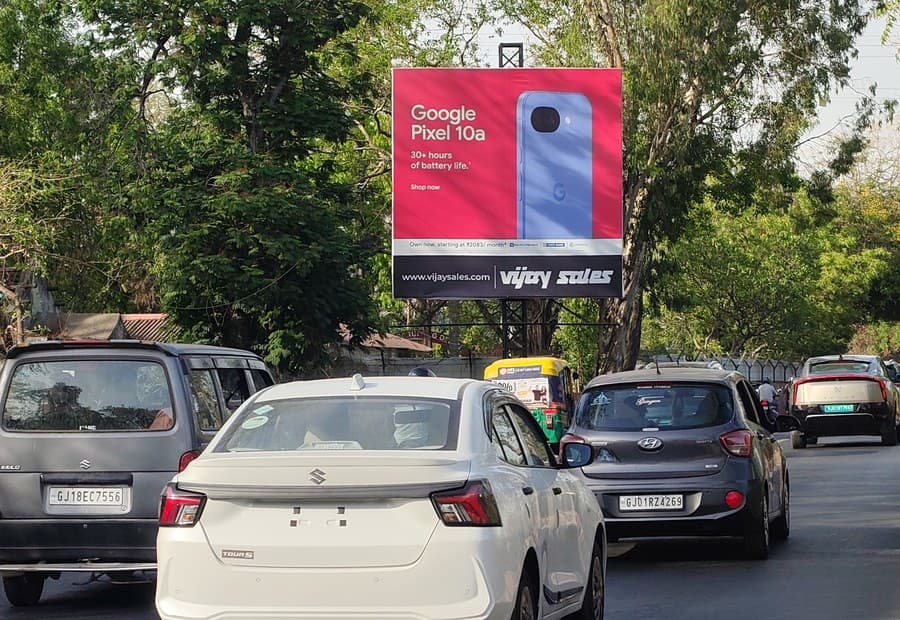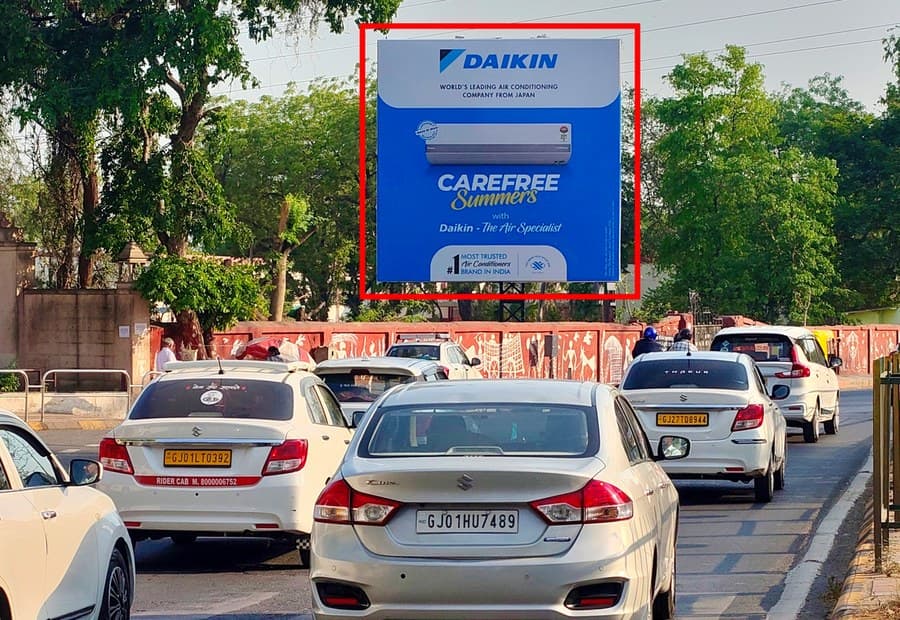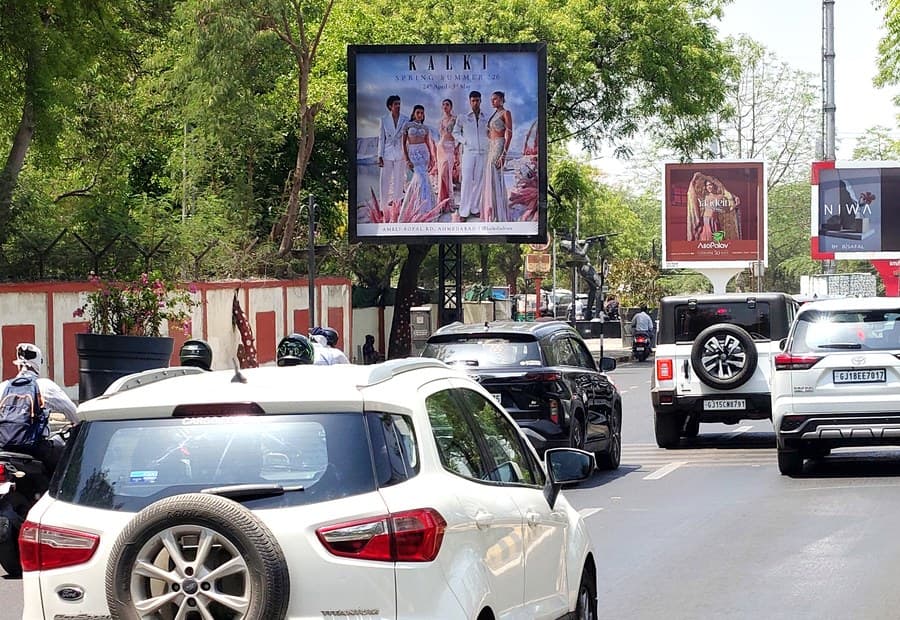
Digital out-of-home replaces a single printed creative with a screen that can rotate multiple ads, run motion graphics, and update content without anyone touching the physical site. That flexibility is why it's grown from a niche format into a mainstream line item on most outdoor media plans.
The numbers reflect that shift. Global OOH spend has moved well past the $50 billion mark, and digital placements now represent close to half of that total, with revenue continuing to grow at double-digit rates year over year.
A lot of that growth is driven by data. AI-assisted placement tools and audience analytics let planners choose sites and dayparts based on who's actually likely to pass by, and programmatic buying now lets advertisers purchase DOOH inventory in a way that looks a lot more like buying digital media than booking a traditional hoarding.
Contextual triggers are the other big shift. Creative can now change automatically based on live conditions, weather, time of day, even sports scores or traffic data, so a single booking can show a different, more relevant message throughout the day instead of one fixed design for weeks.
Interactivity is closing the loop between the street and the screen. QR codes and AR elements on a digital board give viewers a direct way to act on what they've just seen, which also gives advertisers a cleaner way to trace a site visit, a search, or a conversion back to the campaign.
DOOH does carry a premium, typically 30 to 60 percent above an equivalent static site, but it buys flexibility that static formats can't match: creative rotation, dayparting and real-time updates in a single booking. For time-bound offers, launches or multi-message campaigns, that flexibility usually earns back the premium.